Kneaded butter ✔330g laminating butter or PDO butter ✔130g flour
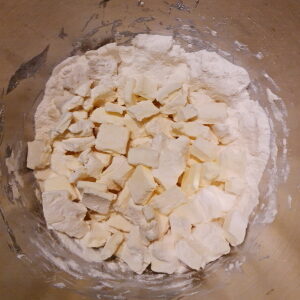
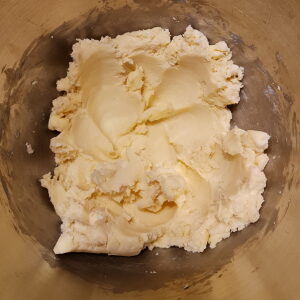
Place the laminating butter, cut into pieces, and the flour in the bowl of a food processor. Mix with the dough hook until the mixture is smooth.
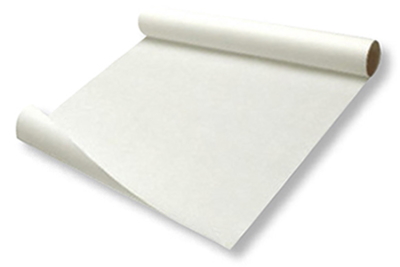
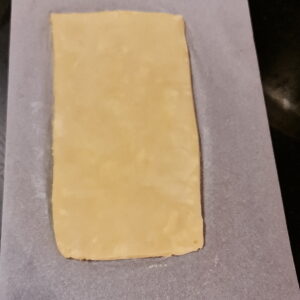
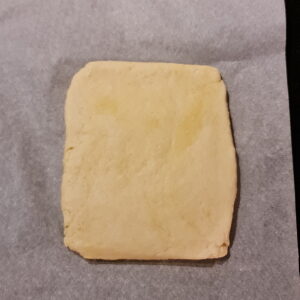
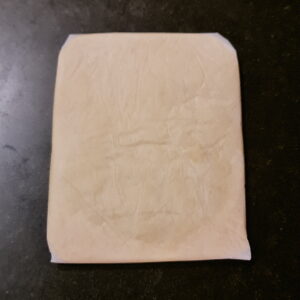
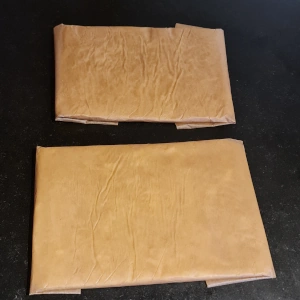
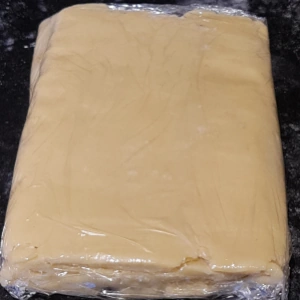
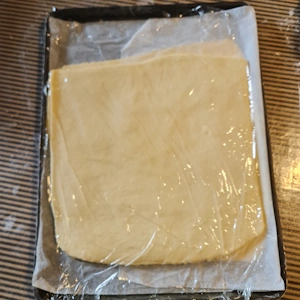
Spread onto a sheet of baking paper and shape into a rectangle of even thickness. Cover with cling film and chill for at least 1 hour.
Dough ✔100g softened butter ✔305g plain flour ✔10g salt ✔125g cold water ✔3g white vinegar
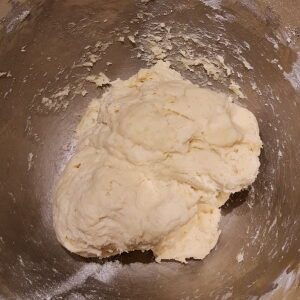
Place the softened butter, salt and flour in the bowl of a food processor. Begin mixing, then pour in the cold water and vinegar.
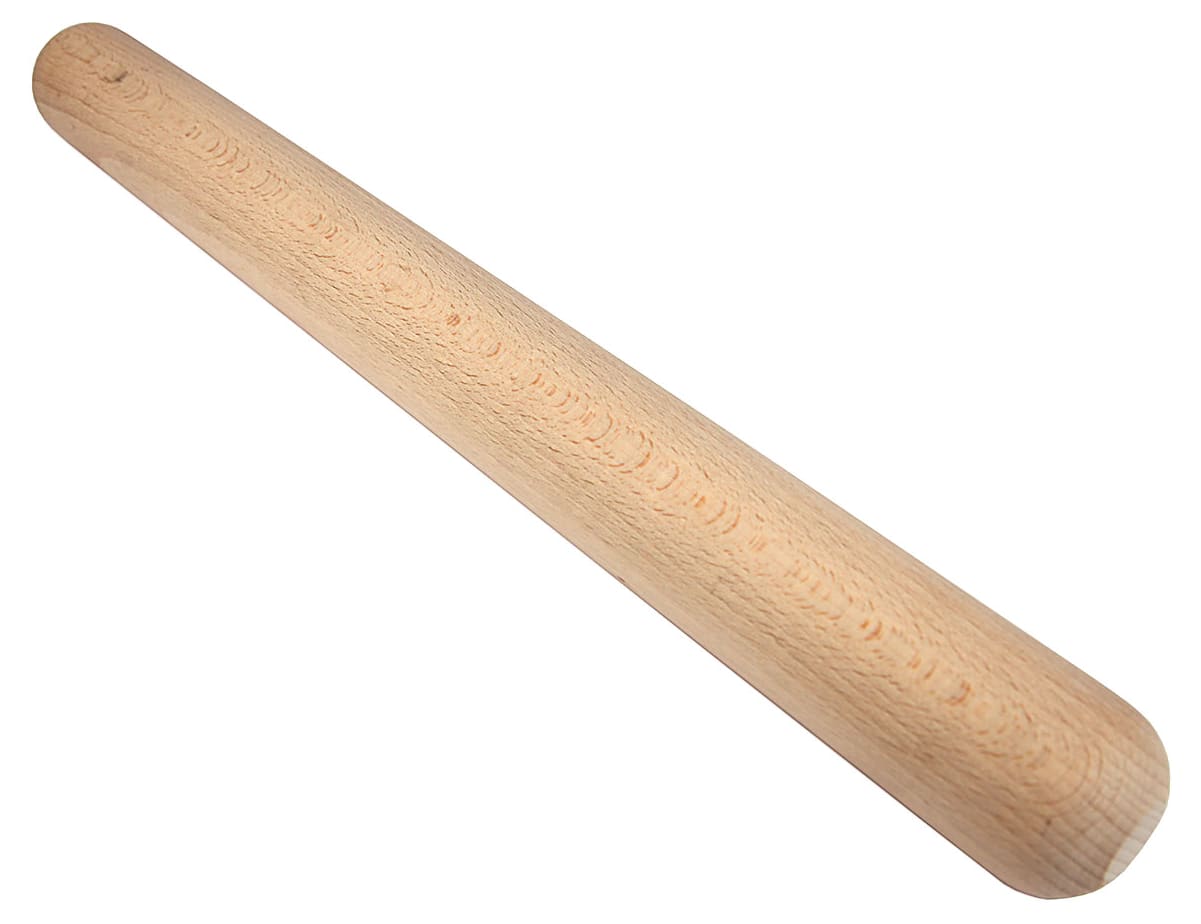
Then pour onto a sheet of baking paper and shape into a rectangle the same width as the kneaded butter. Use a rolling pin to create an even rectangle. Cover with cling film and refrigerate overnight.
The next day, we will now perform two double turns and then one single turn, leaving the dough to rest in a cool place for at least two hours between each turn.
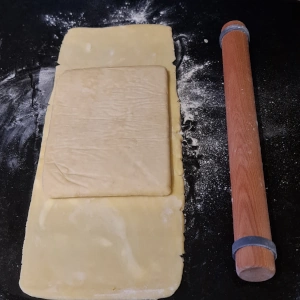
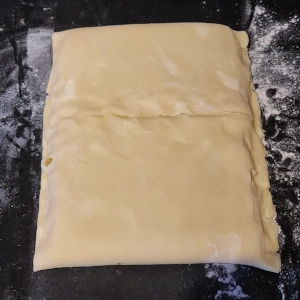
On a floured work surface, roll out the kneaded butter into a rectangle. Place the dough in the middle. Fold both ends of the kneaded butter towards the middle, over the dough, to completely enclose it.
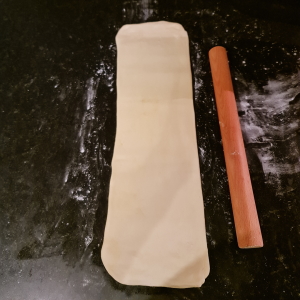
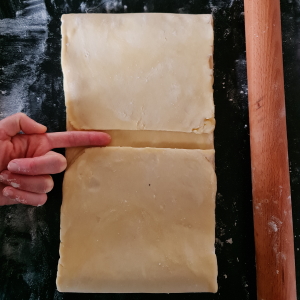
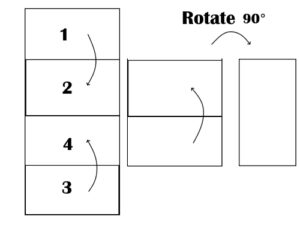
First double turn or portfolio Roll out the dough lengthwise with a rolling pin. Fold the top quarter down, then the bottom quarter up, leaving a space of about one to two fingers.
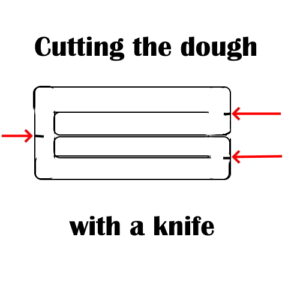
Then fold the dough in half. Rotate the dough a quarter turn. Using a knife, make a slight cut in the dough on both sides. Cover with cling film and chill for at least 2 hours.
Second double turn or portfolio – identical to the previous one Roll out the dough lengthwise with a rolling pin. Fold the top quarter down and then the bottom quarter up, leaving a space of about one to two fingers. Then fold the dough in half. Rotate the dough a quarter turn. Using a knife, make small cuts in the dough on both sides. Cover with cling film and chill for at least 2 hours.
Single turn Roll out the dough again lengthwise, rotate it a quarter turn and fold it into thirds, first the right side towards the middle, then the left side.
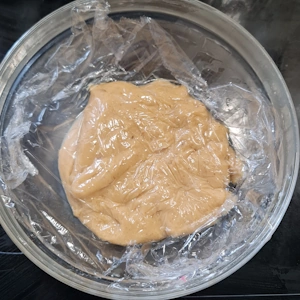
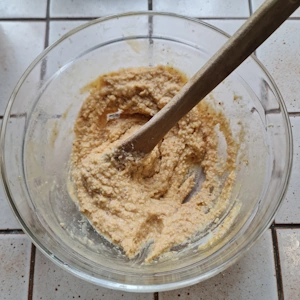
Heat the milk (with a little rum, if desired) in a saucepan. In a bowl, mix together the egg, sugar and cornflour. Pour the hot milk over the mixture, then return everything to the saucepan and cook until thickened. Remove from the heat and add the hazelnut praline. Mix together. Cover with cling film and set aside in a cool place.
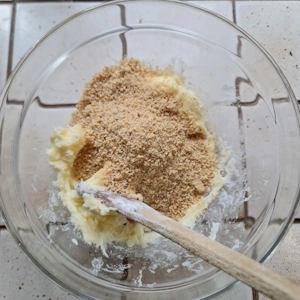
Add the hazelnut powder, egg and rum. Mix all the ingredients together.
Hazelnut frangipane cream
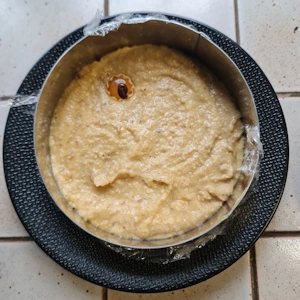
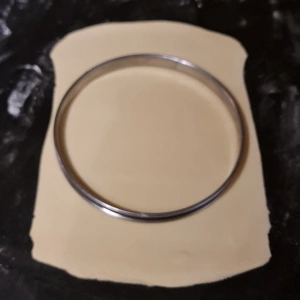
Mix the hazelnut cream (2/3) and the praline pastry cream (1/3). Pipe into a 14 cm diameter dessert ring, which has been lined on one side with baking paper. Place a bean inside and put in the freezer overnight.
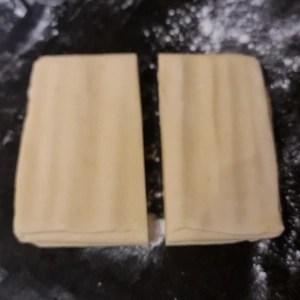
The next day, cut your puff pastry in half.
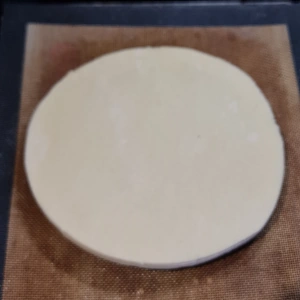
Roll out your puff pastry into two large squares large enough to hold your galette.
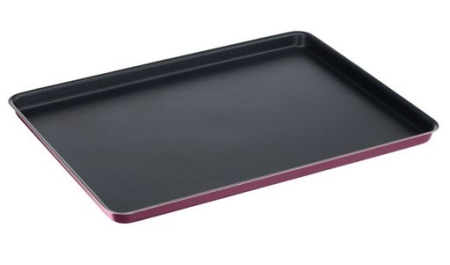
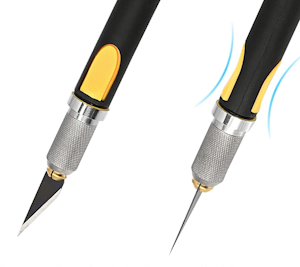
Place your two rectangles of dough back on your baking tray, cover with cling film and return to the fridge for at least 30 minutes to ensure your dough is nice and cool. (Use a cutter or scalpel to cut the dough so as not to crush the sheets).
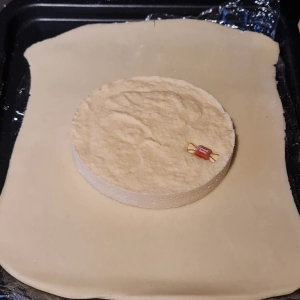
Place the frozen hazelnut frangipane cream in the middle. Brush water around the edge of the frangipane cream. Place the pastry in the fridge for 30 minutes.
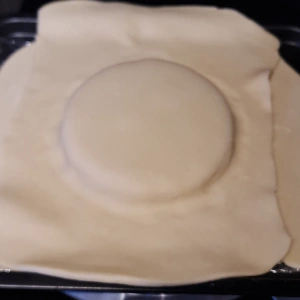
Place the second square of puff pastry on top, turning it 90°C. Press down all around to separate the pastry layers without crushing the dough too much.
Cut out the dough with a cutter, using a circle or saucepan lid as a guide. Turn the whole thing over onto your baking tray covered with a micro-perforated silicone mat.
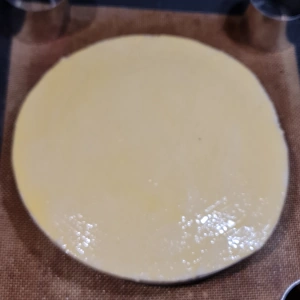
Brush the top of the galette with a mixture of egg yolk and cream (be careful not to apply egg yolk to the edges), then place in the fridge for at least 10 minutes to allow the yolk to dry slightly.
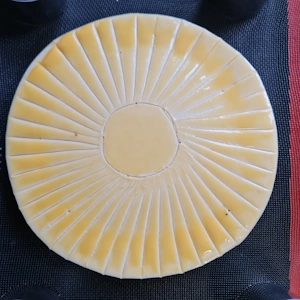
Brush with egg yolk again, then decorate the galette with the back of a knife. Return the galette to the fridge for 30 minutes before baking. Prick the pastry (make small holes with a wooden skewer) around your decoration so that air can escape during baking.
Place 4.5 cm high wedges or small dessert rings on your baking tray and place a rack on top to prevent your galette from rising too much.
Bake at 180°C for 45 minutes, then lower the temperature to 160°C for 40 minutes.
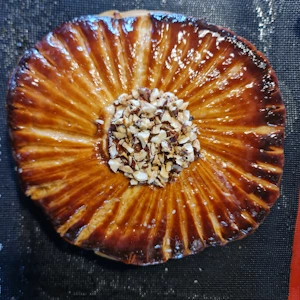
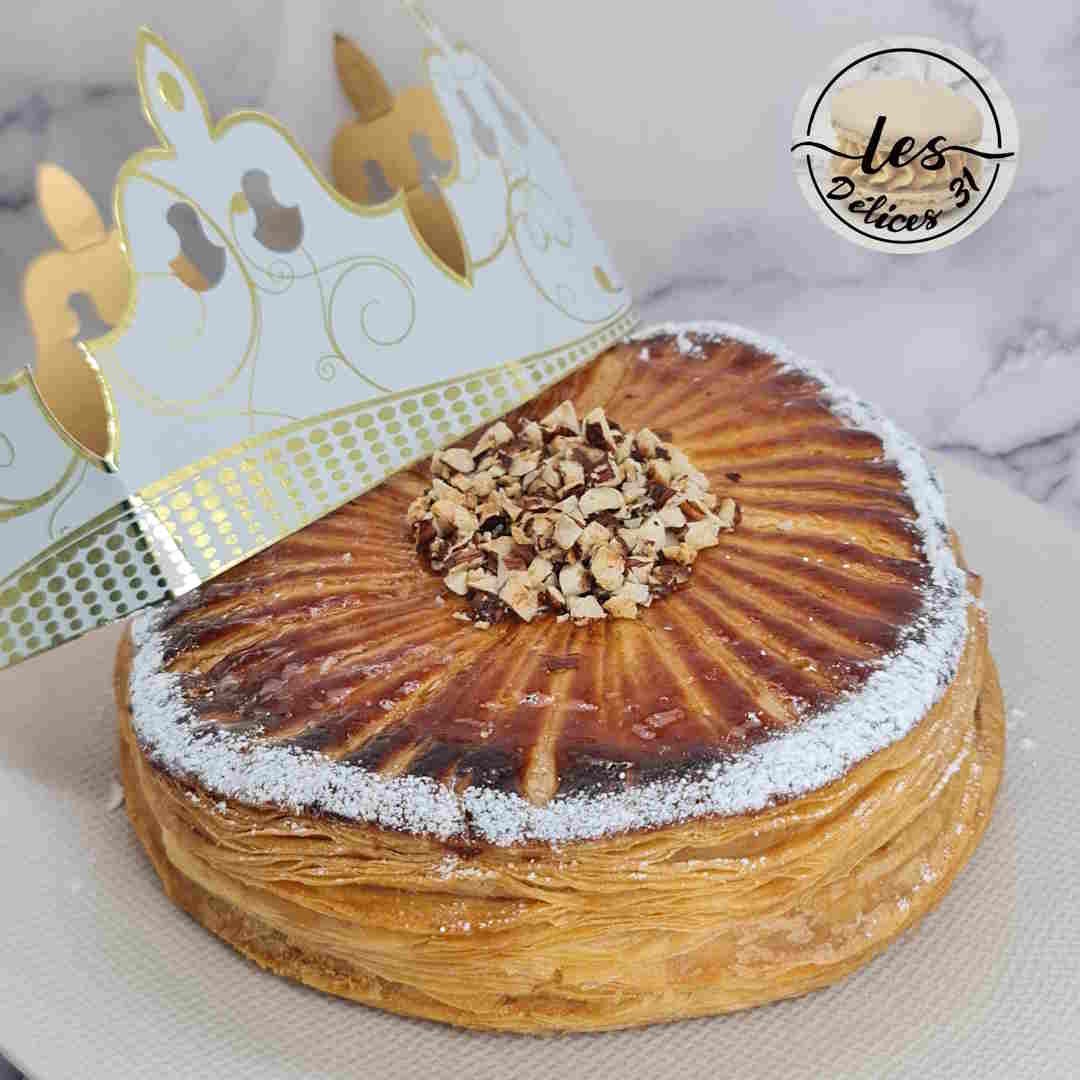
Using a silicone brush, brush your galette with a mixture of water and sugar (brought to the boil in a small saucepan) as soon as it comes out of the oven to give it more shine.
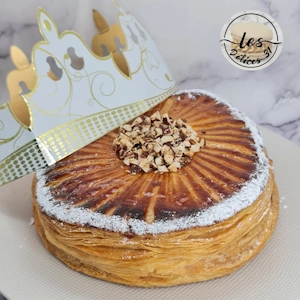
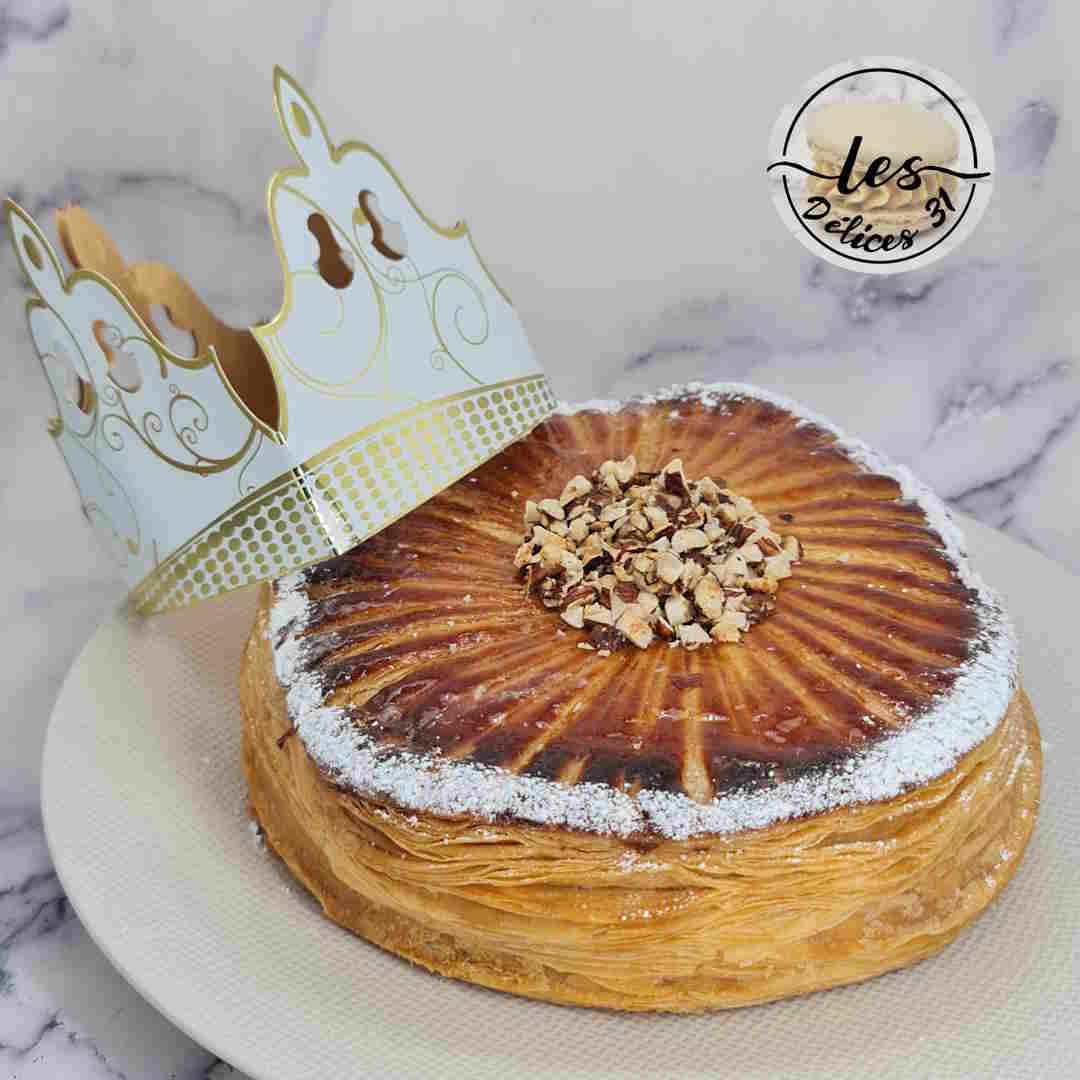
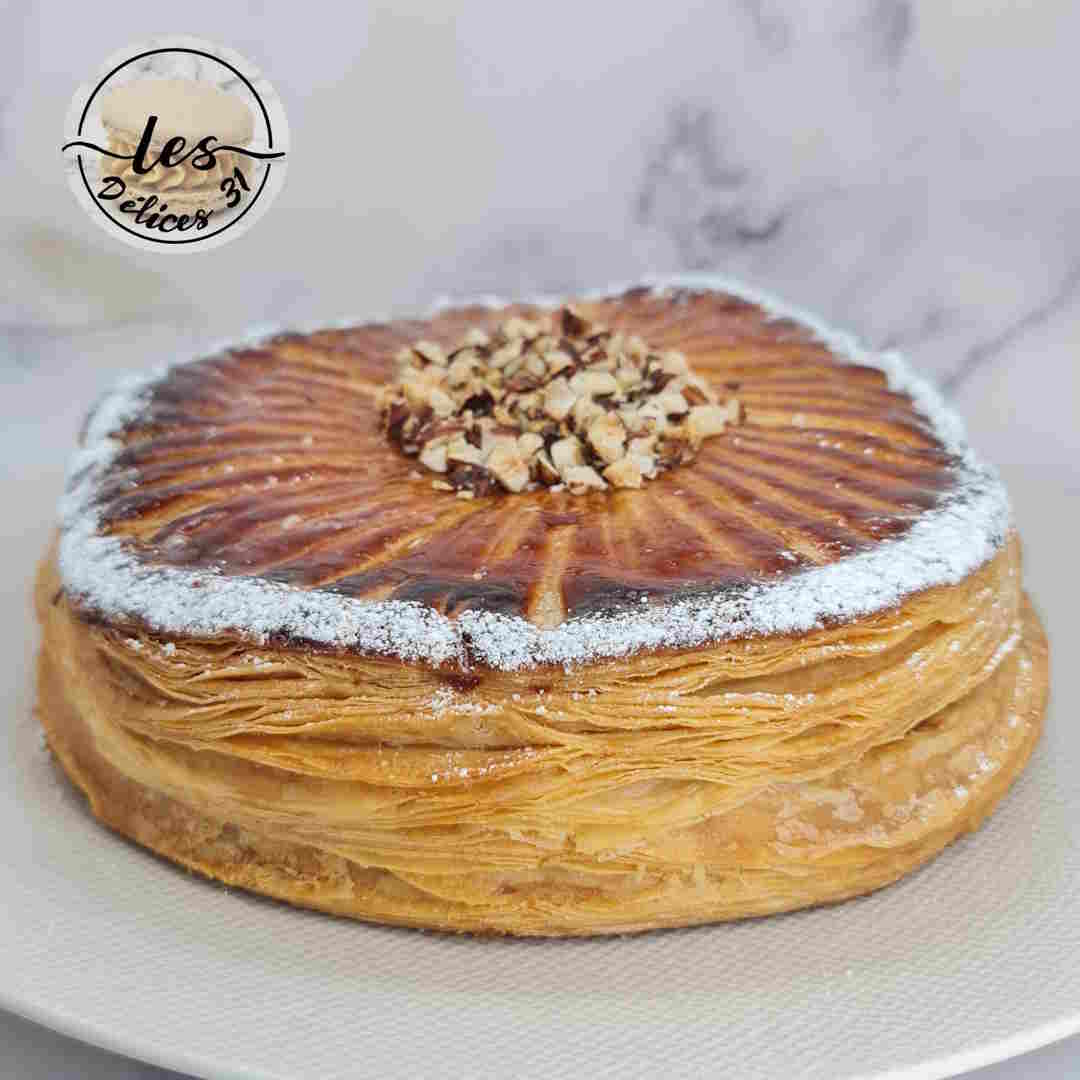
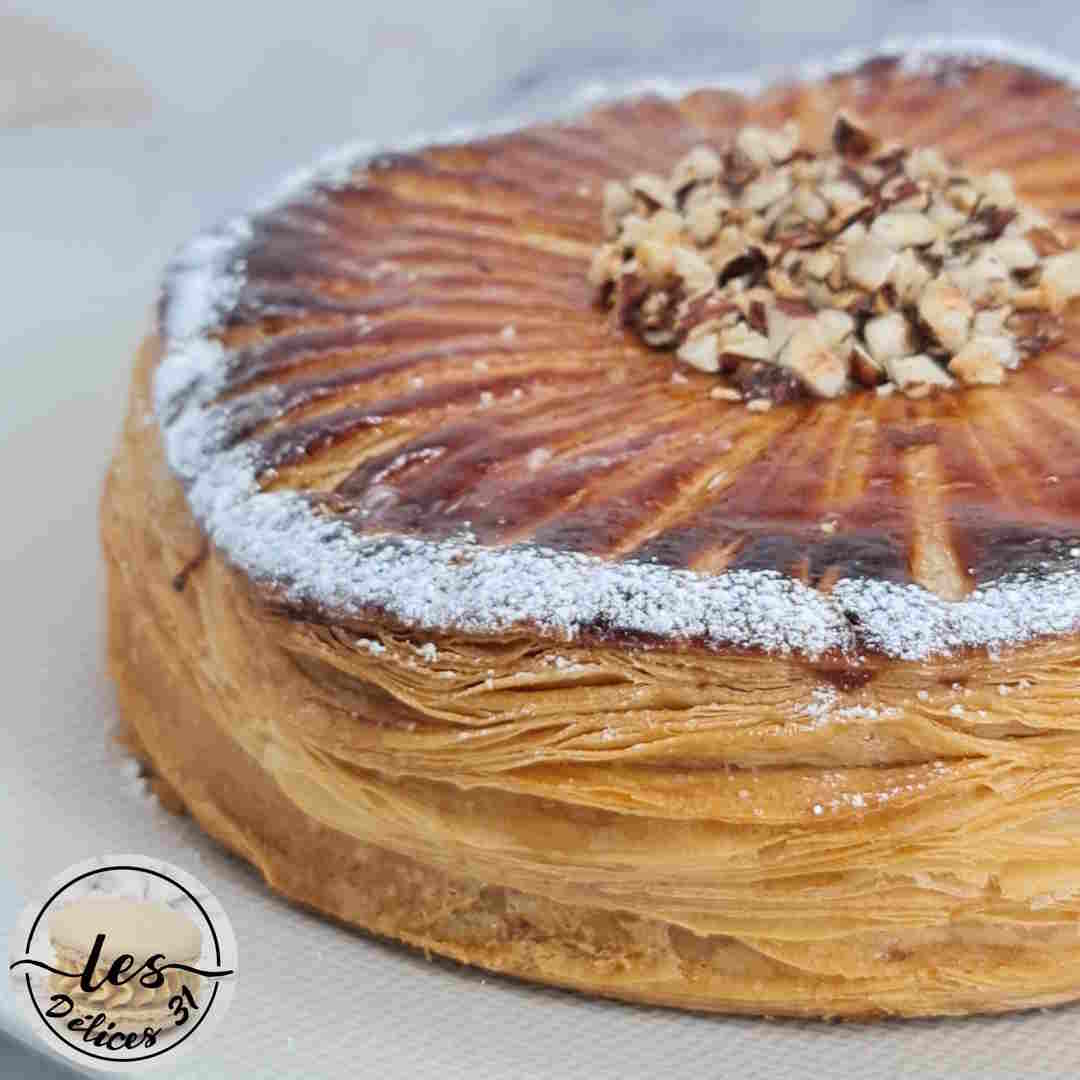
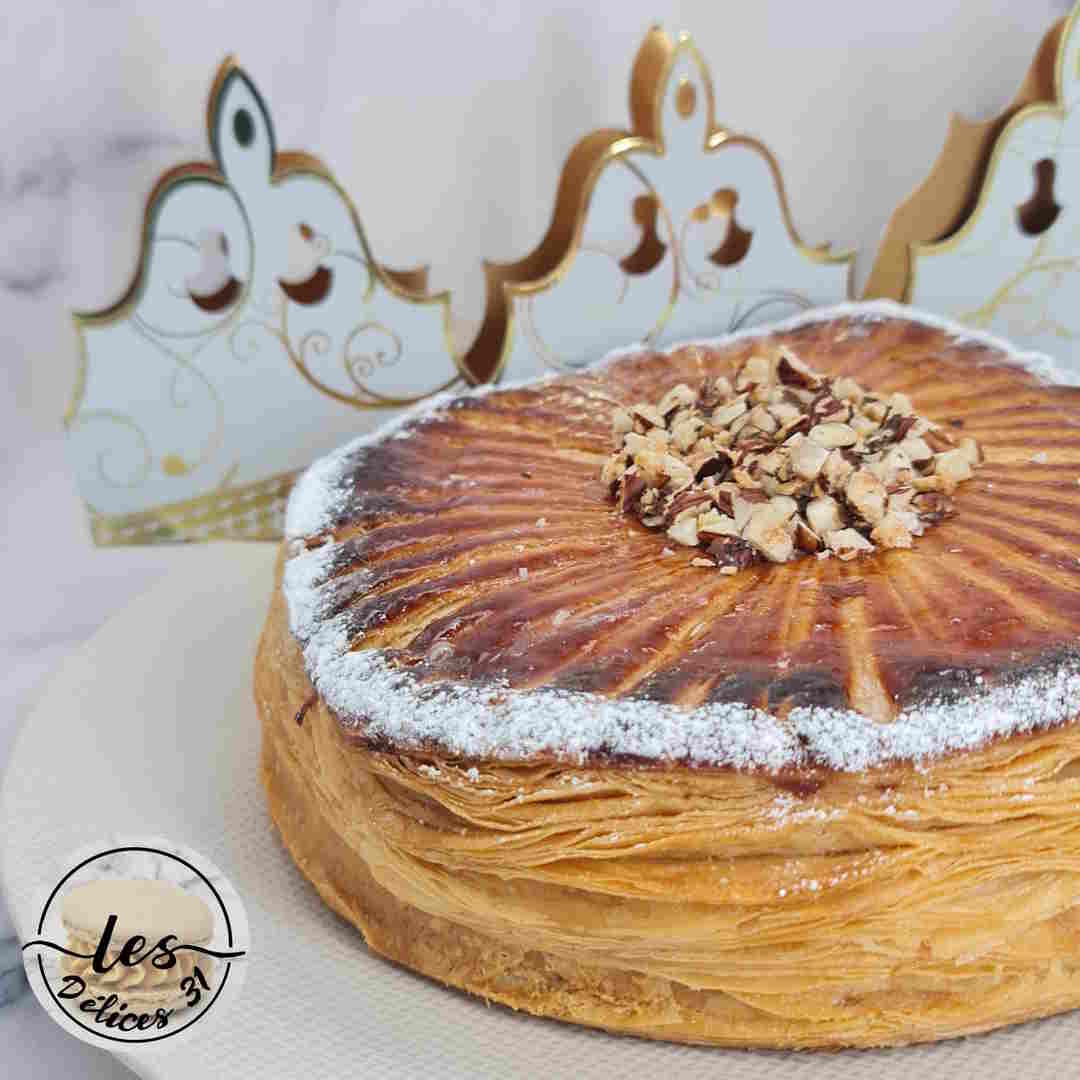
I added a few chopped hazelnuts, roasted in a frying pan, on top. I sprinkled icing sugar around the edge of the galette.